


Get a free marketing audit. Choose the area you want us to look at — website, SEO, AI visibility, brand, social, content or media — and we’ll show you the gaps and where your next move makes the most sense.
A television campaign puts your business in front of people. A thoughtful media strategy gives those placements a purpose: reaching potential customers and learning what moves them to act.
Programming Insider has named Dragon Horse Agency among its “5 Best TV Advertising Agencies in Bonita Springs for Measurable Reach,” recognizing DHA as “Best for a CTV-First Strategy.” The feature highlights our approach to starting with streaming television and adding traditional television when it can reach additional audiences.
We appreciate the recognition because it brings attention to a question every business should ask before committing to an advertising schedule: What does this investment need to accomplish?
Before choosing placements, there is work to do. Who are you trying to reach? What do they need to understand about your business? And what would make them take the next step?
The answer should shape the campaign.
A resort seeking future bookings has different priorities from a local service business trying to generate calls this month. Even with similar budgets, their audiences, messages, and timing may require very different plans.
For us, that is where the strategy begins. The objective gives each decision a reason, from the first creative concept to the way results are reviewed.
It also creates a useful test for the media plan: Can we explain how each placement supports the business goal?
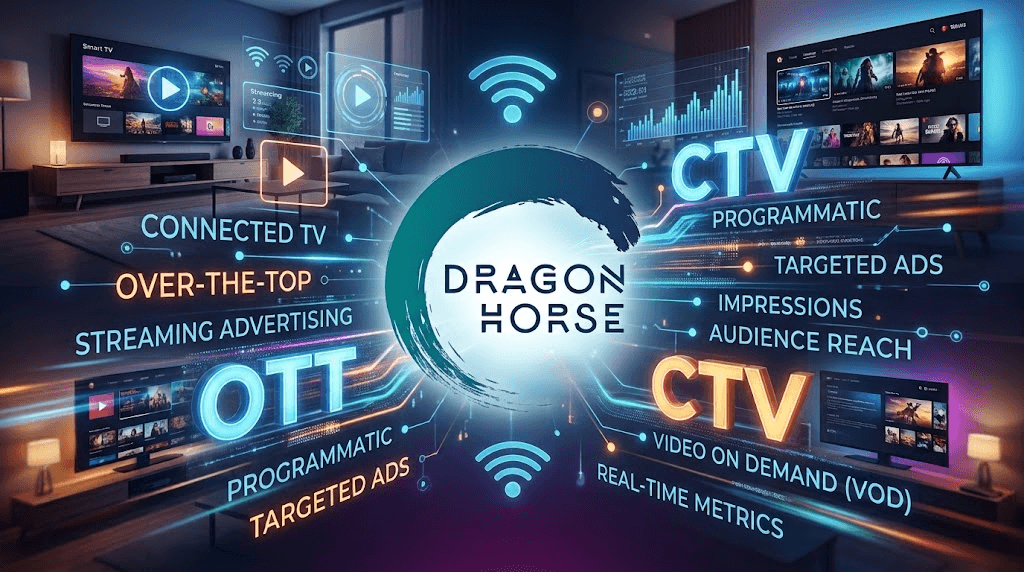
Connected TV, or CTV, refers to television content delivered through an internet connection. A CTV-first approach considers streaming placements early in the planning process, with the audience and campaign objective guiding how other television channels fit.
The word “first” matters. It describes a starting point while leaving room for the plan to develop.
Businesses deserve that flexibility. A media recommendation should follow the opportunity to reach relevant viewers. As a campaign progresses, the team should keep asking whether the current allocation still makes sense.
Where could additional spending help? Where should the campaign pause? What have we learned that should influence the next decision?
Those questions keep the strategy connected to the work it is supposed to do.
Reach tells you how widely a message travels. Its value becomes clearer when you consider who received it and what happened afterward.
That is why agreeing on success before launch matters.
If qualified inquiries are the priority, the campaign review should address inquiry quality. If the goal is to build awareness in a new market, the reporting should help assess progress toward that goal.
The same discipline applies to interpreting results. A change in performance deserves investigation. What else was happening during that period? Did the offer change? Could the website handle the response? Were inquiries followed up promptly?
Advertising operates within a business. Understanding that context helps turn reporting into decisions the business can use.
A media plan creates an opportunity to be seen. The message still has to earn the viewer’s attention.
That means giving people a clear reason to care, an offer they can understand, and a next step that feels relevant. Creative and media planning should support each other throughout the campaign.
We are grateful to Programming Insider for including Dragon Horse Agency in this feature and bringing attention to our CTV-first approach.
Planning your next TV advertising campaign? Connect with Dragon Horse Agency to discuss your audience, your goals, and how television can support your business.
info@dragonhorseagency.com/239-325-5088/www.dragonhorseagency.com
Dragon Horse Agency, A Fiduciary To Brands ©