.avif)
.png)



Get a free marketing audit. Choose the area you want us to look at — website, SEO, AI visibility, brand, social, content or media — and we’ll show you the gaps and where your next move makes the most sense.
AI isn’t the enemy of good writing. Lazy AI use is the problem. It can help get past the blank page, organize rough thoughts, test angles, clean up structure, or look at a draft from another direction. It can move work along when the deadlines are tight and the content list just keeps growing.
But it cannot know the client the way I know the client. It can’t hear the difference between copy that sounds polished and copy that sounds true. It can’t always tell when a sentence is technically fine but completely forgettable. That is where human work still matters most. And honestly, that is where I think a lot of brands are getting AI copywriting wrong.
A business starts using AI for content writing, and at first, it feels like a breakthrough. Now a blog can be written in a matter of minutes. Social captions can be generated almost instantly. A landing page draft takes shape without anyone starting at a blank page for half a day.
That part feels good until something starts to feel “off.” The copy is clean and the grammar is technically fine. All the keywords are included. Everything makes sense. But the voice is gone. The blog sounds just like any other blog in the industry. The social captions sound like what any competitor could post. The marketing copy says what it’s expected to say, but the brand voice has been lost.
That is the problem. AI copywriting tends to find middle ground. That’s how the tool works. It predicts patterns in writing. It uses language that is safe and common. That is perfect for a starting point, but becomes dangerous when no one steps in to make the copy specific to them.
For most brands, average content is not enough to build trust, create brand recognition, or make someone remember who said it.
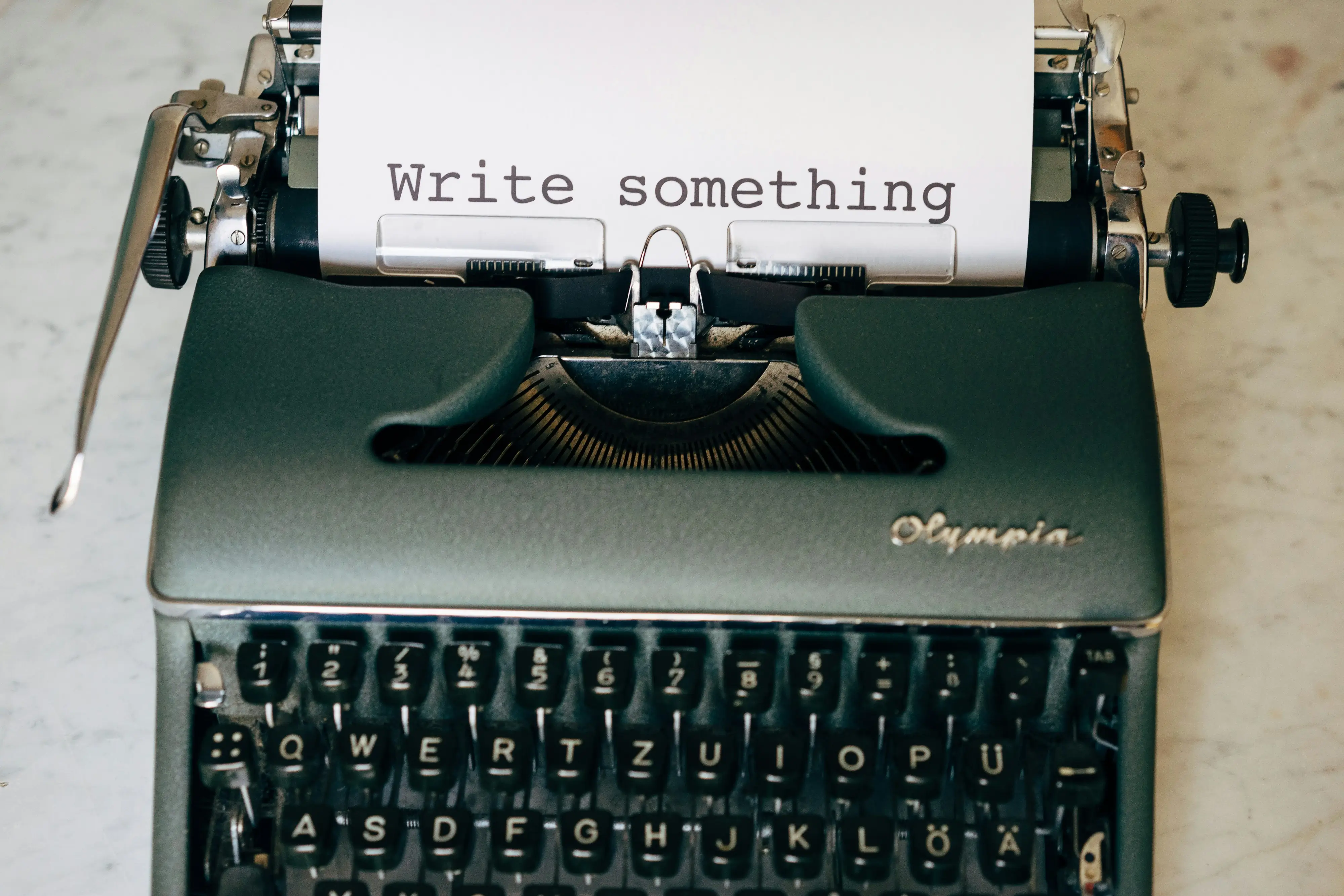
One of the biggest mistakes brands make is treating brand voice like something that can be added at the end. People will type, “Make this sound like our brand,” and expect the tool to know what that means.
But if the voice hasn’t been clearly defined, AI is just guessing, and to be fair, so is everyone else.
A brand voice cannot just live in someone’s head. It needs to be written down, tested, and understood. What words does the brand use? What words would the brand never use? Is the tone direct, warm, sharp, polished, conversational, bold, careful. Or something else entirely? This is where brand archetypes can help. They give the brand a clearer personality, so AI is not just matching words. It is working from a stronger sense of how the brand should think, speak, and show up.
More importantly, what does the brand actually believe? Your brand voice isn’t just about how you sound. It’s your point of view behind the words.
Before AI can be used well for a client, there needs to be an understanding of the client beyond just the basic service list. What do they care about? What are they tired of seeing in their industry? What do their customers ask? What does their team say all the time?
That’s the stuff AI can’t invent. It can shape it, but it cannot replace it. When working on brand voice, real examples matter. Show copy that feels right. Show copy that feels wrong. Give the phrases the client loves and the ones they hate. Give the things they say in meetings that never make it to the website but probably should. The voice shows up in the details, not a prompt.
Brands do not need to avoid AI. They need a better workflow. The goal is to use it where it is helpful and keep humans where they are necessary.
Strategy has to come first. Before using AI, the purpose of the piece needs to be clear. Who is it for? What does the reader need to understand? What is the main idea? What action should they take? What would make this piece useful instead of just another piece of content?
AI should not be deciding those things.
“Originality and genuine value are the real differentiators, and they always have been. AI makes this more obvious, as it allows authentic originality to shine. When everyone can produce technically competent copy instantly, the brands that are willing to spend time thinking independently and, as a result, sound like themselves are the only ones anyone remembers,” stated Julie Koester, Co-Founder of Dragon Horse Agency.
That is exactly the issue. AI can help create competent copy quickly, but competent is not the same as memorable, and it is definitely not the same as strategic.
.webp)
AI can be part of the process, but the first draft should not be treated like the final answer. That is where a lot of AI copywriting starts to fall apart. The draft comes out clean enough, so it gets published with only a light read-through. Maybe someone fixes a headline. Maybe they adjust a sentence. But the deeper work may never happen, and that is where the opportunity is to bring the voice back.
Before anything gets written, know why the piece exists. A blog should not exist just because a keyword exists. A landing page should not exist just because a service needs a page. Social content should not exist just to fill the calendar.
Koester goes on to note, “People have so much of their time wasted every day online. Brands are ‘talking’ for the sake of attention, but not necessarily because they have something of value to say. There needs to be a reason apart from repeatedly telling people what you want them to know.”
That reason shapes the copy. It decides what gets included, what gets cut, and what the reader should feel clear about by the end.
AI is helpful when options are needed. It can generate headline directions, organize messy notes, outline a blog, simplify a section, or look for gaps in a draft. It can also help pressure-test an idea and show where the weak spots are.
But AI needs context. The audience matters. The goal matters. The keywords matter. The client’s tone matters. The things the brand does not want to say matter just as much as the things it does. Without that context, the copy usually becomes generic fast.
This is the non-negotiable part. Cut the filler, remove the phrases that sound like they came from every marketing blog on the internet, look for the sentences that are technically fine but do not say anything, and replace vague claims with real examples whenever possible.
The AI draft may give the piece structure, but the critical rewrite gives it a pulse. This is where the copy starts to feel human again.
This part matters more than people want to admit. AI can be wrong with full confidence. It can create a sentence that sounds polished but is not accurate. That is a problem for any brand, especially when the copy involves claims, statistics, dates, product details, legal topics, health topics, or anything tied to trust.
Every fact needs to be verified before publishing because clean writing is not enough. It has to be true.
If there is one editing rule that improves AI copywriting, it is to replace the general with the specific.
That is the difference between content that fills space and content that builds confidence. AI reaches for broad language because abstractions are safe, but safe copy is often forgettable. The details are what make people trust the message: the real example, the sharper sentence, the client’s actual language, and the thing the audience already knows but has not seen said clearly.
AI does not only have to be used to draft. It can also be used to challenge the work. Ask where the copy sounds vague. Ask what a skeptical reader would question. Ask where the argument feels thin or where the piece sounds too much like competitor content.
That can be helpful, but the final decision still belongs to the person doing the work. AI can point out a weak section, but it cannot always know what matters most to the client, the audience, or the strategy.
“We treat AI as a force multiplier for talented people, never a replacement for them. The work that builds trust — the strategy, the storytelling, the judgment about what’s true and what matters — stays with humans. That’s not nostalgia. It’s how you protect quality at scale.” — Blake Renda, Co-Founder of Dragon Horse Agency.
AI can support the work, but it should not own the work. The judgment behind the message still has to stay with people.
AI has made it easier to create a decent first draft quickly, which means decent is no longer enough. A clean blog is not enough. A caption that sounds fine is not enough. A landing page that checks the keyword box is not enough.
The copy still has to mean something. It still has to sound like the brand. It still has to give the reader a reason to care. That is where strategy, content writing, and brand voice have to work together.
AI can help move the process faster, but it cannot replace the thinking that makes copy worth reading, at least not if the goal is to create content people actually remember.
AI helps teams work smarter, move faster, and organize content more efficiently, but it should not become the final voice of a brand. That responsibility still belongs to the people who know the client, understand the audience, and care enough to make the words sound right. AI copywriting can absolutely be part of a strong content strategy. It can help brands create more, organize faster, and move with more consistency. But if the final copy could belong to anyone, it is not finished. At Dragon Horse Agency, we pair strategic copywriting with AI-supported workflows to help brands scale content without losing the voice that makes them recognizable, because faster content is only valuable when it still sounds like you.
Want words that actually sound like your brand? Let's talk.
Author: Marissa Garner, Project Manager & Copywriter, Dragon Horse Agency